
Opinion: Making end-of-life choices
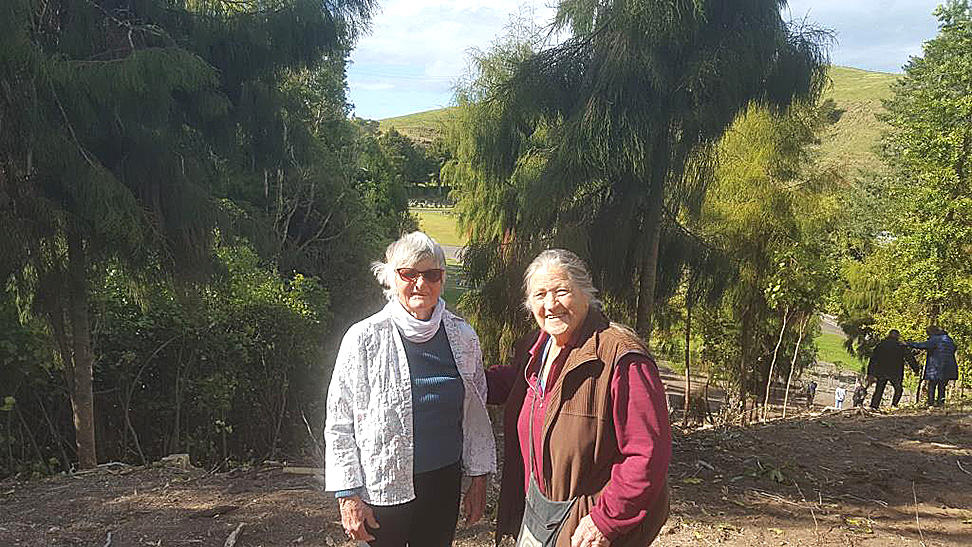
CHANGING FUNERAL PRACTICES: Suzanne Williams and Raewyn Kingsley Smith in 2020, checking out the natural burial site at the cemetery It has now has witnessed several burials. Photos supplied
.
■ An increasing number of choices are coming our way at the end-of-life, says co-chair Ngā Pou Herenga: The End-Of-Life and Funeral Guides’ Collective, Ruth Gerzon.
As someone moving towards that time, slowly I hope, I try to keep up with them all.
Back in 2020, residents pressured Whakatāne District Council to set up a natural burial cemetery and the council quickly complied.
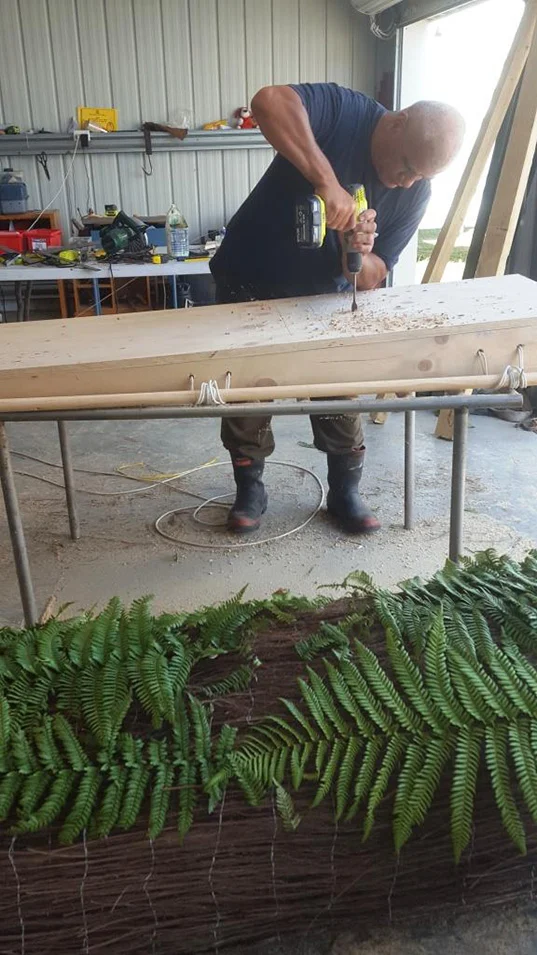
Toby Salmon in Te Teko also began making some alternatives to coffins. These new options were just the beginning.
I’m now co-chair Ngā Pou Herenga: the End-of-Life and Funeral Guides’ Collective, which is all about making more choices available.
My fellow co-chair, Stella Black, has organised an information day on many options, so I decided to find out more on those new to me.
The main one I researched is organ donation, interviewing three of the organ donation team.
It’s intriguing to know that science has advanced so far that I might, for example, bequeath a gift of sight perhaps to someone after I die.
Umpteen years ago, being community minded I never hesitated to tick donor when applying for my driving licence.
Apparently, that is not enough. I also have to notify my next of kin that this is my preference.
However, now I’m over 75, I didn’t think I had any potential gifts to offer.
How wrong I was. I have learnt that my liver and kidneys could still be useful, as well as my tissue, including my eyes.
Surprisingly, it’s not because I am a relatively sober woman who has a liver unsullied by excess alcohol.
Even those who consume much greater quantities than I, and who are even older, can donate a liver or kidney.
However, I will need to die rather quickly and remain on a ventilator while the donor team fly in from around the motu.
I am pretty good at organising events, but I think I might pass on that one and leave it to chance.
Unfortunately, there’s not enough of us dying the way the organ donation team need, but don’t read that as a plea for more car crashes.
Between 60 and 70 people donate organs each year, to over 200 grateful recipients, and there’s still a long waiting list for more.
At the forthcoming meeting another speaker will talk about assisted dying, a relatively new option welcomed by some.
The uptake by Māori is lower than non-Māori.
Researcher Tess Moeke-Maxwell interviewed over 50 Māori whānau of those who chose this pathway and will present her findings.
There’s plenty more to learn, so come with your questions and a couple of friends to the public meeting on End-of-Life choices.
You’ll also learn about hospice, the No One Dies Alone initiative, alternatives to embalming and natural body care.
A finger food lunch will be served. It is important to register by email: [email protected].