
Opinion: Volunteer group hopes to re-open Toi's track
.
■ Angus Robson, writing on behalf of the West End Walkway Volunteer Group, outlines the group’s case for repairing and reopening the slip-closed section of Ngā Tapuwae o Toi (Toi’s Track) – and responds to council concerns about cost, safety and liability.
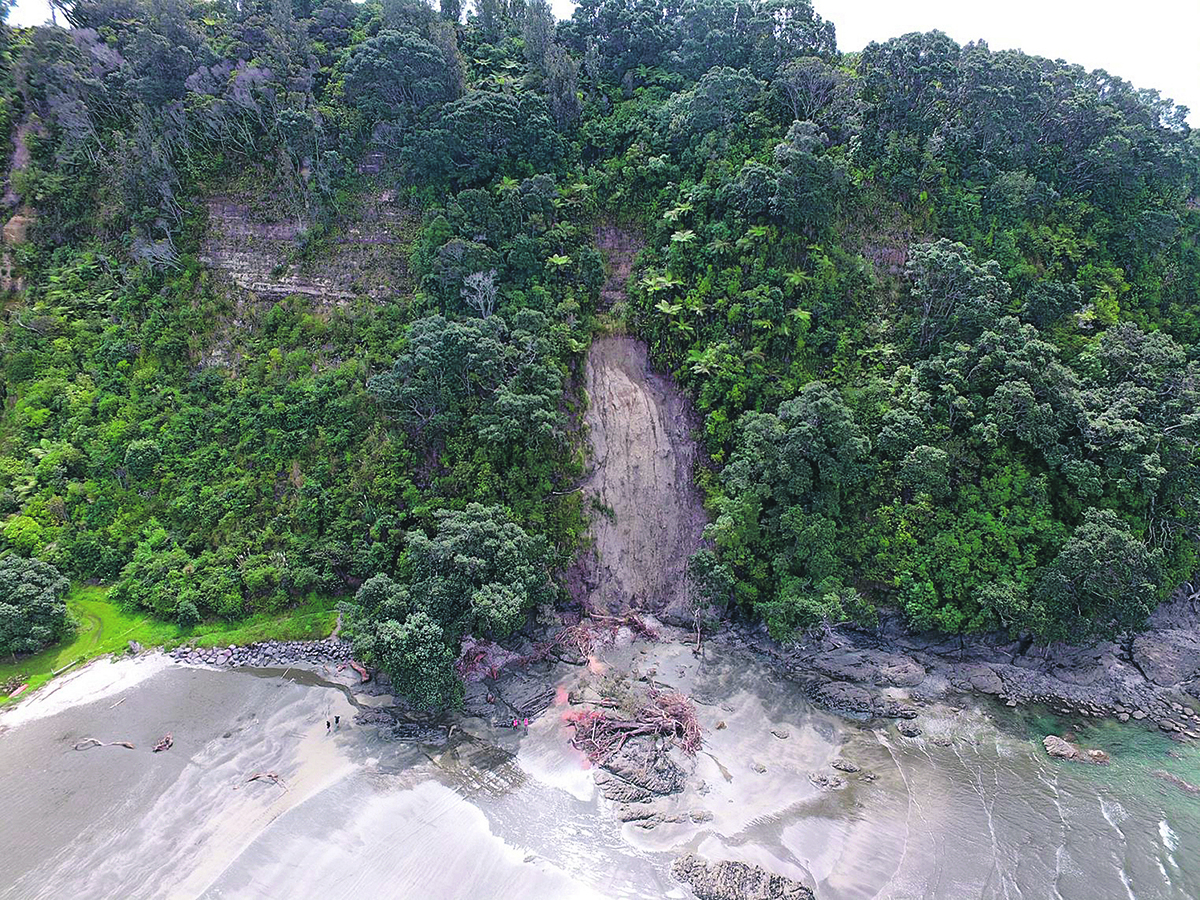
The West End Walkway Volunteer Group are dedicated volunteers hoping to repair, open and maintain the Nga Tapuwae O Toi track, (Toi’s track) between West End and Ōtarawairere. It has been closed for almost four years because of slip damage.
We have been engaging with our community for many months now, and there is almost universal support to repair the track soon.
The council staff recommendation is to close the track, based on cost, risk to the public, and personal liability of the chief executive of the council.
Let’s address risk first.
The geotech report by Tonkin and Taylor is comprehensive. Included is a study showing the risk to a walker using section 2 of the repaired track – 2.2E-07 – is no more than a game of golf or a stroll in a park.
The Toi track will always slip, that is a certainty, just as any steep ground eventually will during heavy rain.
This is a natural process in our landscape, and where it affects roads and tracks we have always dealt with it.
To think we could ever stop slips permanently with engineering shows no understanding of slips or engineering.
The job at hand is to respond to slips when they occur, as we do with our roads. This does not need to be complicated, time consuming or costly, as thousands of slips on Department of Conservation tracks throughout New Zealand have proven.
The important thing is that people are not injured in a slip, and since we know that slips are 50 times more likely to occur following heavy rain, more than 100mm in one event or 200mm over a few days, it is easy to shut the track for those periods.
In fact, it is almost impossible to find a slip-causing injury that happened outside those conditions.
The next thing that is being claimed as a primary reason to close the track is cost.
Council staff have finally released the geotechnical reports after many months of us asking for them.
The reports show similar results to our own ground testing done with Frame Group, and we can confirm our design costings as being realistic. We are able to repair both slips within our budget, at no cost to the council or ratepayers, using the latest techniques and a professionally developed health and safety system.
By contrast, the council budget is over $1 million.
Meanwhile, the cost to the district of delays and possible track closure is ignored by council staff.
Staff also claim there will be “property damage”, without being clear that this refers to the track itself – not other property.
Using normal measures of visitor impact and local health and wellbeing, a cost per year of $1.5 million is estimated. The four years of track closure has cost the district $6 million so far, and permanent closure will cost a whole lot more.
The last and greatest objection, we are told, is the personal liability of the council chief executive for people being hurt on the track, potentially resulting in his prosecution.
There is no evidence this could ever happen if he does “due diligence”, and in the view of specialist health and safety lawyers, it is a misinterpretation of the law.
Due diligence means he ensures the track rebuild is done to a professional design, is managed under an industry-standard health and safety system, is checked by council staff and is signed off by the designer – exactly as we are offering.
Council staff have the same liability for work done on council roads, which slip regularly.
These are fixed with minimal fuss, cost or long-term closure.
We do not appreciate that councillors and the public are being spooked by what we see as overstated risks for the track.
We have asked many times for the council to get a legal opinion from a preeminent health and safety lawyer to clear this up, as it keeps getting trotted out.
If the chief executive is correct in his position, there would be several instances in New Zealand over recent decades where the chief executives of either district or regional councils had been liable for prosecution for personal harm for “acts or omissions”, which means either doing something wrong, or not doing something that should have been done that resulted in an injury or death.
We have not found any recorded instance of this happening in New Zealand. The bar is incredibly high, and there is case law to protect the chief executive, especially if he has done adequate due diligence, as we are offering.
There are examples where councils were warned of risk, the accident happened, people were hurt or killed, and there was no comeback on the chief executive despite them knowing beforehand of the risk, in many cases with no record of due diligence by the chief executive.
We were told last month we could present our proposal to the council’s projects and services committee meeting tomorrow.
We are now told our presentation is not wanted at that meeting. This is disappointing.
In summary, there is always risk when walking in nature, but it is low and manageable.
The cost of our proposal for slip repair is zero to ratepayers and council.
The time we could do this in is a few months, from go-ahead to opening, which brings instant economic and wellbeing benefits.
The risk of liability for prosecution of the chief executive for negligence is negligible, and his fears can be easily resolved with a legal opinion.
With our proposal, all the bases of safe, fast, cheap and good are covered.
If you are like us, the track is of great significance. It is a treasured taonga. It has history going back hundreds of years.
Childhood memories, sporting events, walking and running it, enjoying the views and Otarawairere Beach, is good for body, mind and soul.
It is a place to be proud of and to bring visitors, children and grandchildren. It means far more to us than words can say.
The community is clear – they want the track back. Soon.
Thankfully, we live in a transparent democracy. The option taken to either close the track or allow our offering to be presented will be taken by councillor vote tomorrow.
We will see those votes and, from the minutes, who argued in favour or against.
It would be astonishing if most councillors voted to close the track against the universal wishes of the community, based on a risk no more than a game of golf.
We trust that they will act in the best interests of the community.
As we have said from the start, we would far rather work with the council staff than against them.
We have had excellent dealings with the mayor and councillors, and the Ōhope Community Board, to date.
Our plea is that council study the evidence, make a rational decision, support our community and help add to the sum of human happiness.