
Let's fix our forgotten highway
Paul Charman
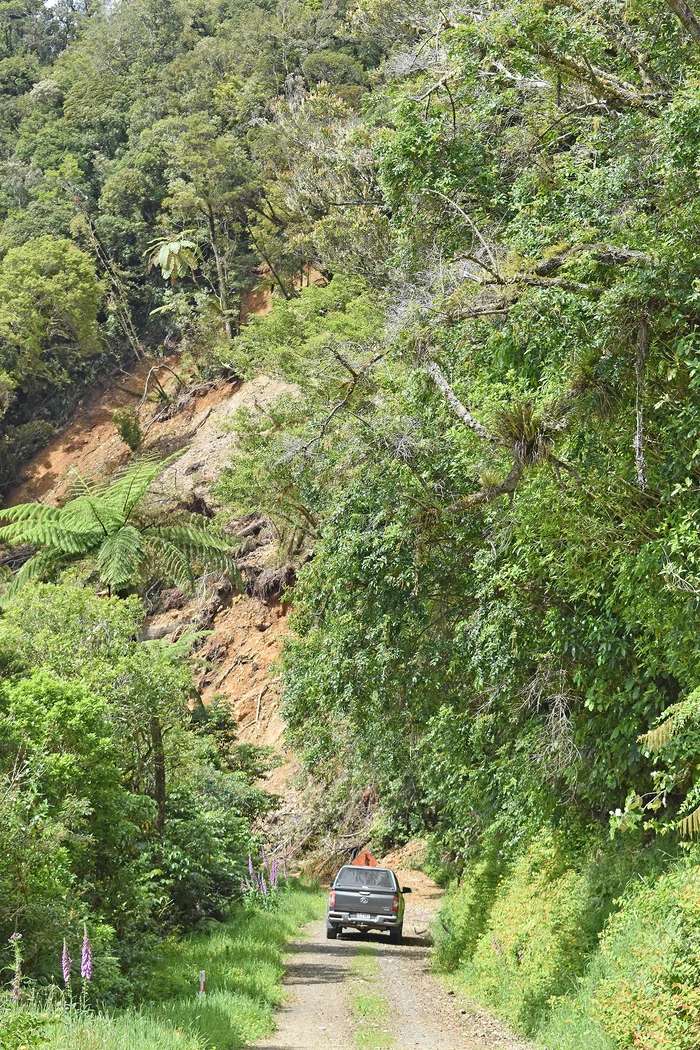
All power to the engineers pondering repairs to the massive slip that severed Motu Road last month.
This historic byway has been a big tourism earner for Ōpōtiki, and can be again – we need it fixed as soon as possible.
It’s a paradox that remote routes such as The Forgotten Highway in the King Country, Molesworth Station Road behind the Kaikōura Ranges and our own Motu Road are so desirable to people working in tall buildings.
The back blocks deliver firsthand adventures to city folks who mainly watch others experiencing them on YouTube.
A lot of Aucklanders will be buying themselves electric touring bikes this Christmas.
Many having well-paid jobs – think doctors, lawyers and tech bros with cash to spend.
Their toys are often mountain bikes, increasingly electric ones; sometimes adventure motorbikes or maybe a great big four-wheel drive.
An electric touring bike with full suspension generally costs between $7000 and $20,000; a Ducati Multistrada adventure bike costs almost $50,000; a new Ford Ranger commands about $56,000 to $90,000.
Regardless, the owners of these toys need somewhere challenging to play with them. They want to visit parts of New Zealand with a story to tell, a destination to provide exotic selfie shots, and some stories for the crowd around the office coffee machine.
Motu Road has it all.
Valleys are like the backdrop to a classic 1930s movie location; scary drop-offs concentrate the mind on staying alive, and – talk about remote – there’s even grass growing between the wheel-tracks in some sections of this road.
The first vehicle went through Motu Road in 1914, and for the next 15-ish years, Motu Road was the only vehicular connection between Ōpōtiki and Tairāwhiti, until the Waioweka-Traffords hill was opened up from the late-1920s.
From the early 1930s, the Waioweka became the main route, but Motu Road was still famed as a tourist journey and a stock droving route.
For a few years that relegated Motu Road to being a long and windy link for servicing isolated farms, while Pakihi track regressed to become a foot trail for hunters and trampers.
Motu Road began ringing up tourist dollars for the district during the 80s and 90s, as the air above it buzzed with helicopters carrying motor racing officials and international film crews.
The road was chosen as a stage of the Rally of New Zealand, which was also once part of the World Rally Championship. It became famous internationally for technically difficult, winding, gravel sections – some of these skirting drop-offs hundreds of metres to the valley floor.
Motu Road was acknowledged as up there with the best rally sections in Wales, Finland and Monte Carlo.
Reportedly, champions like Colin McRae and Ari Vatanen regarded it as the most challenging rally route of all.
Then came the Motu Challenge, organised by Multi-Sport Ōpōtiki Inc.
For 32 years, Motu Road was home to the North Island’s premier multisport race.
At its peak, only the Coast-to-Coast race from Kumara Beach, on the West Coast, to New Brighton Beach, Christchurch, could match it.
The event attracted big names in multisport from 1992 right up until last year; the challenge comprised a 65-kilometre mountain bike, 17km run and a 52km road cycle.
This event closed for lack of helpers last year, but the road’s appeal didn’t end there.
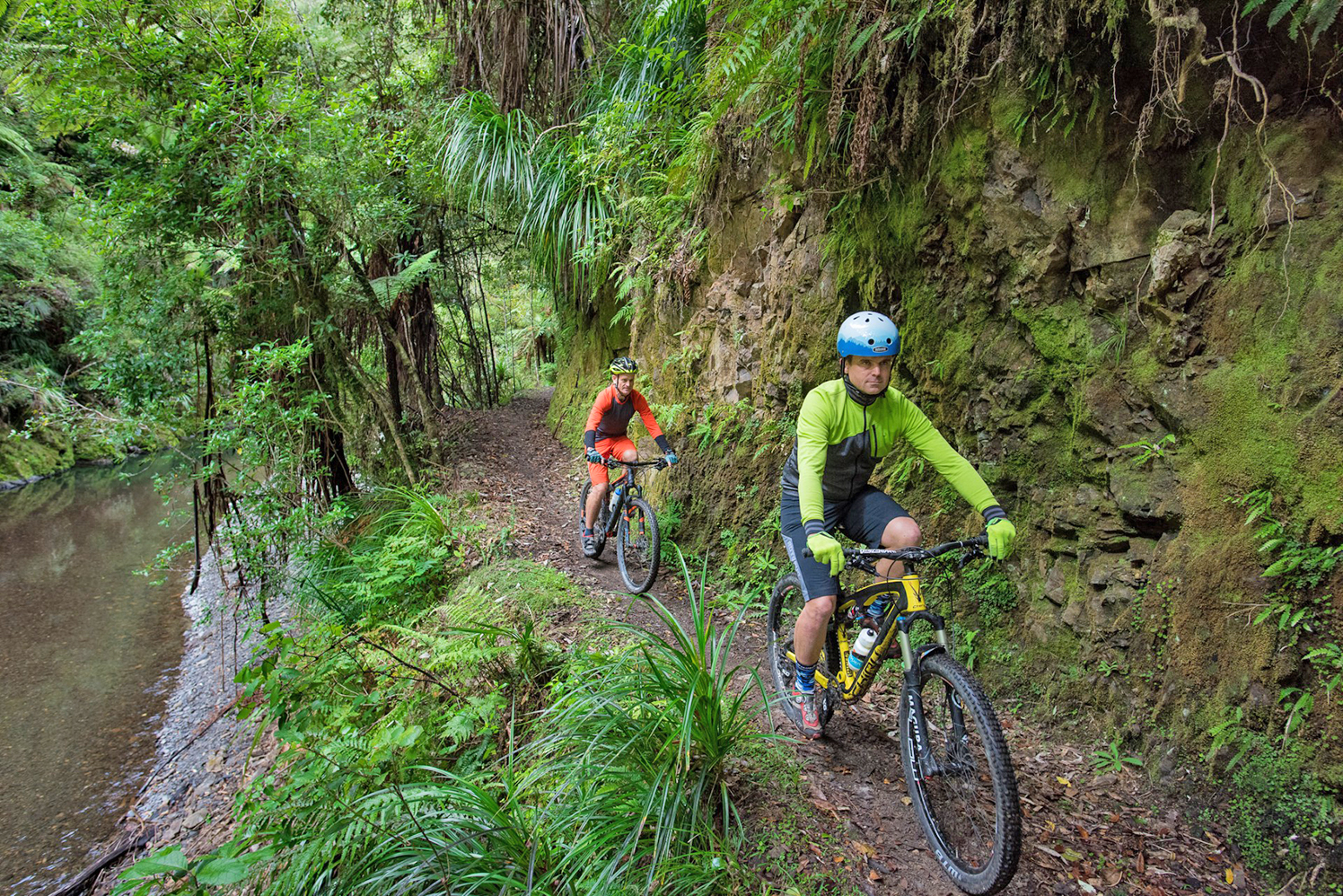
Adventure motorcyclists and four-wheel-drive clubs still visit (or would if it was navigable), but users are now mainly cycling tourists.
Motu Trails opened as one of the country’s great rides in 2012 as part of the push for Kiwi tourism to harness a worldwide adventure cycling boom
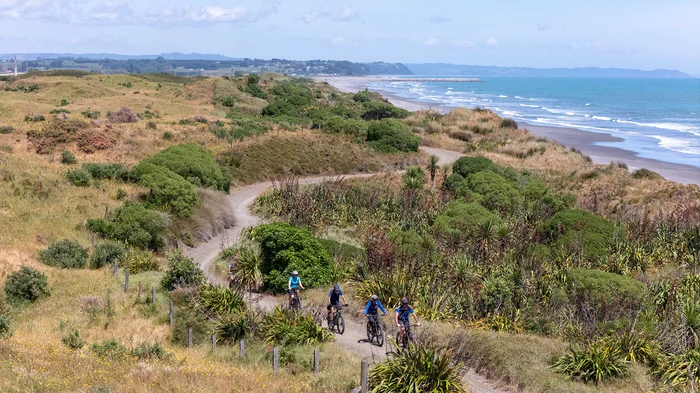
This route begins at Memorial Park and meanders 10km along the Pacific Coast to Jackson Road, where Motu Road begins.
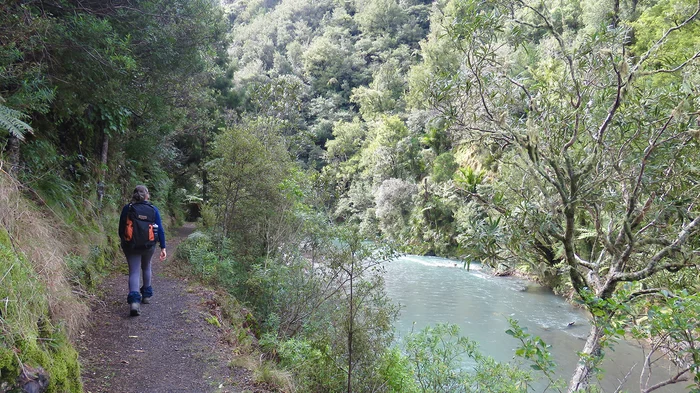
The historic gravel road runs inland through remote countryside to the small settlement of Motu.
It is 48km long and hilly, the highest point being 800m above sea level, 9km from Motu Village.
There are shelters, also warnings such as having your own support vehicle arranged and taking enough food and water. That’s part of the appeal.
Cycle tourism is estimated to be generating $1.28 billion annually for this country. So, the “Lycra shorts set” spends enough each year to buy a new Cook Strait ferry plus the necessary port infrastructure.
Meanwhile, one estimate puts the amount generated in the Ōpōtiki district at $3 million annually.
Cycle tourists buy motel nights and restaurant meals. They gas up their cars, utes and camper vans, get them repaired and buy a wide variety of bits and pieces from local shops. They keep tills beeping, create employment and raise Ōpōtiki’s profile nationally.
True, there’s a hefty maintenance effort to keep the trails open and up to standard. But those of us who live in Ōpōtiki get much of the cost of this first-class tourist attraction paid for us. The Motu Trails are governed by a partnership between the Department of Conservation, Ōpōtiki District Council, Trust Tairāwhiti, Te Tāwhatau o te Whakatōhea and the Motu Trails Charitable Trust.
This charitable trust is the governance hub. It does trail maintenance, supported by multiple charities and corporate donors.
Mostly, all we have to do to keep these wonderful bike trails going is smile, wave, say hi and give good directions.