
$35m aquaculture settlement signed by iwi
.
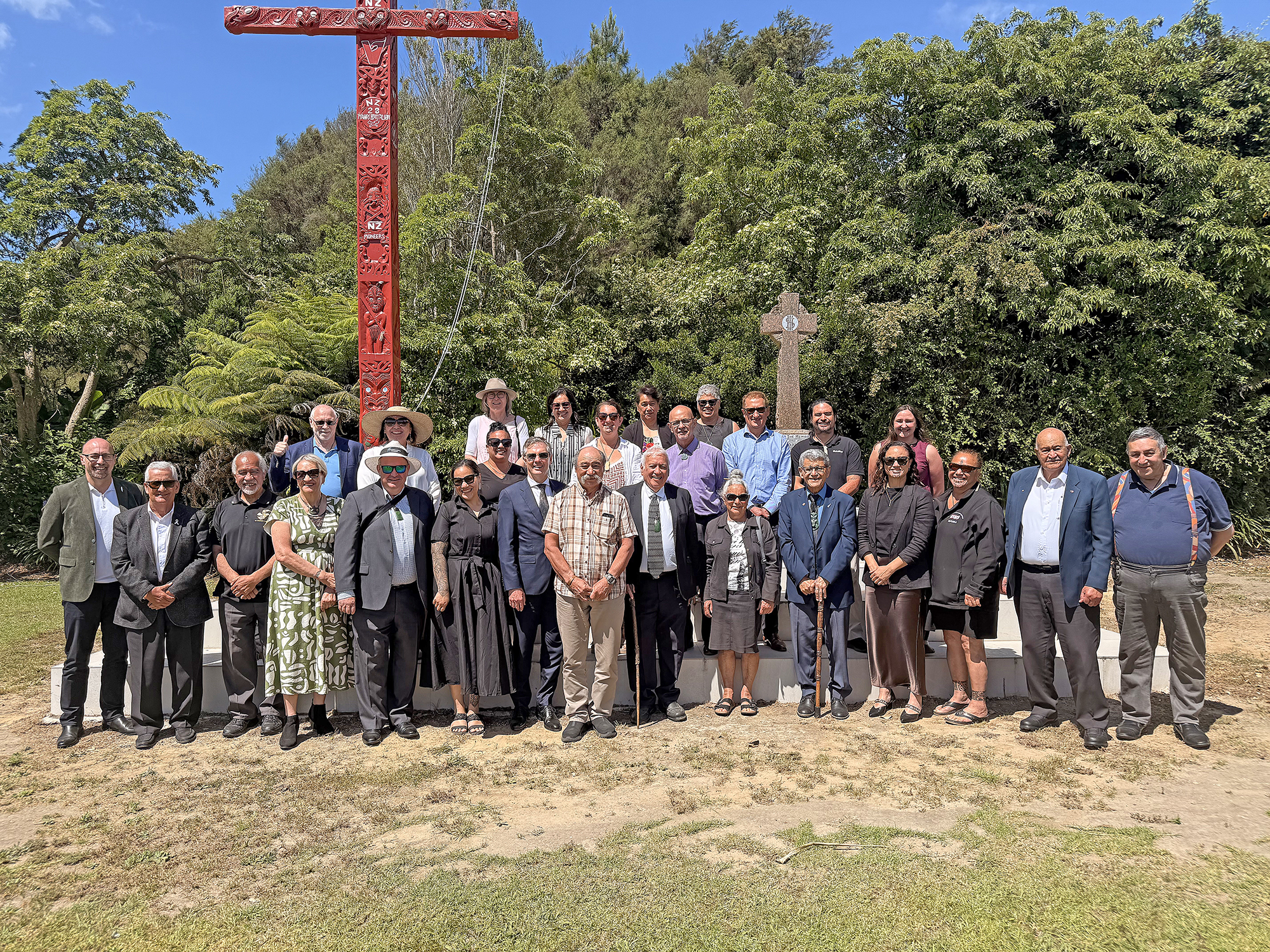
Iwi from across Te Moana-a-Toi gathered in Ōpōtiki this week to sign a Regional Aquaculture Agreement deliving the Crown's New Space Obligations under the Māori Commercial Aquaculture Claims Settlement Act 2004.
The historic signing brought together 12 iwi, the Crown, Bay of Plenty Regional Council, and Te Ohu Kaimoana to unlock 5000 hectares of authorised aquaculture space valued at $35 million, plus $1 million in Crown support for resource consenting.
For Dickie Farrar, chief executive of Te Tāwharau o te Whakatōhea, this marked the realisation of a vision that began 15 years ago when kaumātua and chair of the Whakatōhea Māori Trust Board Robert Edwards shared his aspirations for developing the marine space for Te Whakatōhea.
The Whakatōhea Māori Trust Board has since been succeeded by Te Tāwharau o te Whakatōhea.
“This is a culmination of 15 to 20 years’ worth of work; Robert came to me all those years ago with a vision of developing the marine space for our people, Ms Farrar said.
“I’m so happy that he gets to see his vision fulfilled. He’s 93 years of age and he gets to be a part of this amazing event, taking his vision and the aspirations of our kaumātua and our rangatahi, and developing this into a strategy that will benefit all Whakatōhea mokopuna, the collective iwi and the region itself.”
The settlement represents far more than marine space – it embodies the power of unity.
Peter Rice, chair of the Iwi Aquaculture Working Group, emphasised that kotahitanga was the true prize of the journey.
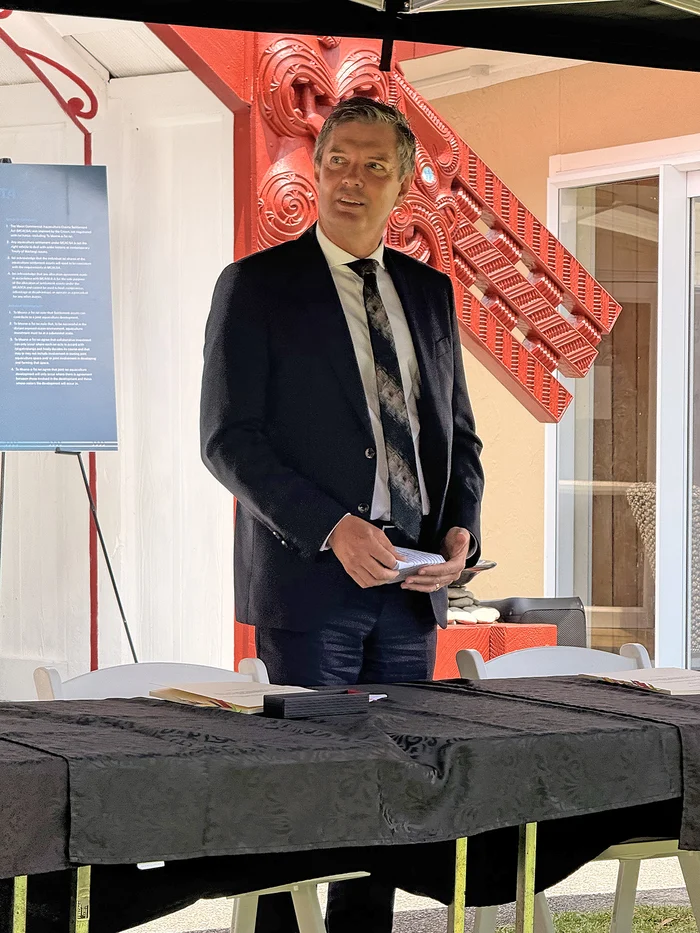
“The first prize we’ve got is working together. Without working together, the settlement’s worth almost nothing in many ways, Mr Rice said.
“It’s all about the outcomes we want to see our people having. We want them to be wealthy – but wealthy in so many ways, not just monetary gain, but jobs, iwi pride and hauora.”
Mr Edwards, whose vision sparked the journey, reflected on what the signing meant for future generations.
“The signing is the end of a journey, but also the beginning of a new haerenga (journey) to implement our aspirations out in the ocean,” Mr Edwards said.
“Our aspirations are that we work together and build a thriving aquaculture industry for future generations.
“In doing so, we must make sure we bear in mind our tikanga, the environment, and the sustainability of the whole project.
“If we were to ruin it, there’d be no future for our mokopuna of the future.”
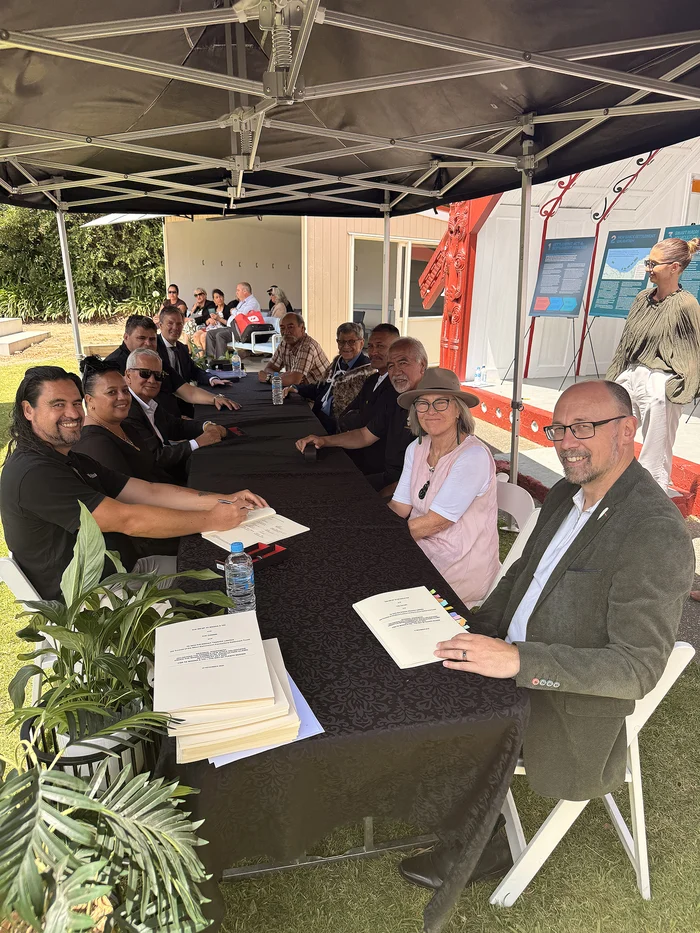
The path to this historic agreement began in 2017 when the Whakatōhea coastal permit applications triggered “New Space” settlement obligations.
What followed were six years of careful negotiation, with the agreement timeline extended six times to ensure iwi had time to properly assess suitable sites, negotiate fair terms, and make informed decisions about settlement assets.
The Regional Aquaculture Agreement is part of a larger vision for Te Moana-a-Toi, where 25,000 hectares of aquaculture development is projected. This includes existing Deed of Settlement spaces for Whakatōhea and Te Whānau- ā-Apanui, Te Huata International’s 10,000-hectare application near Te Kaha, and planned future development.
The settlement aligns with the Crown’s Aquaculture Development Plan, which targets $3 billion in annual revenue by 2035 (currently valued at $0.6 billion). Māori aquaculture settlements are recognised as fundamental to achieving this goal.
Immediate priorities include securing resource consents for the authorised space and developing detailed business plans. The settlement creates opportunities for employment, skills development, and economic self-determination across the region.
Ms Farrar noted the next generation was ready to carry the vision forward.
“It’s going to be a new leadership that picks that dream up,” she said.
“We’ve found them, our rangatahi are amazing. So many of them. Our job is done when we pass the baton on.”